A Guide to Complaint Management Systems
Discover how a complaint management system can transform your business. This guide covers key features, benefits, and how to choose the right software.
At its core, a complaint management system is the software and the process you use to capture, track, manage, and resolve customer feedback from the moment it arrives until the issue is closed. It pulls every customer problem into one central, organised hub, so nothing gets lost in a messy inbox or jotted on a forgotten sticky note.
Your Central Command for Customer Feedback
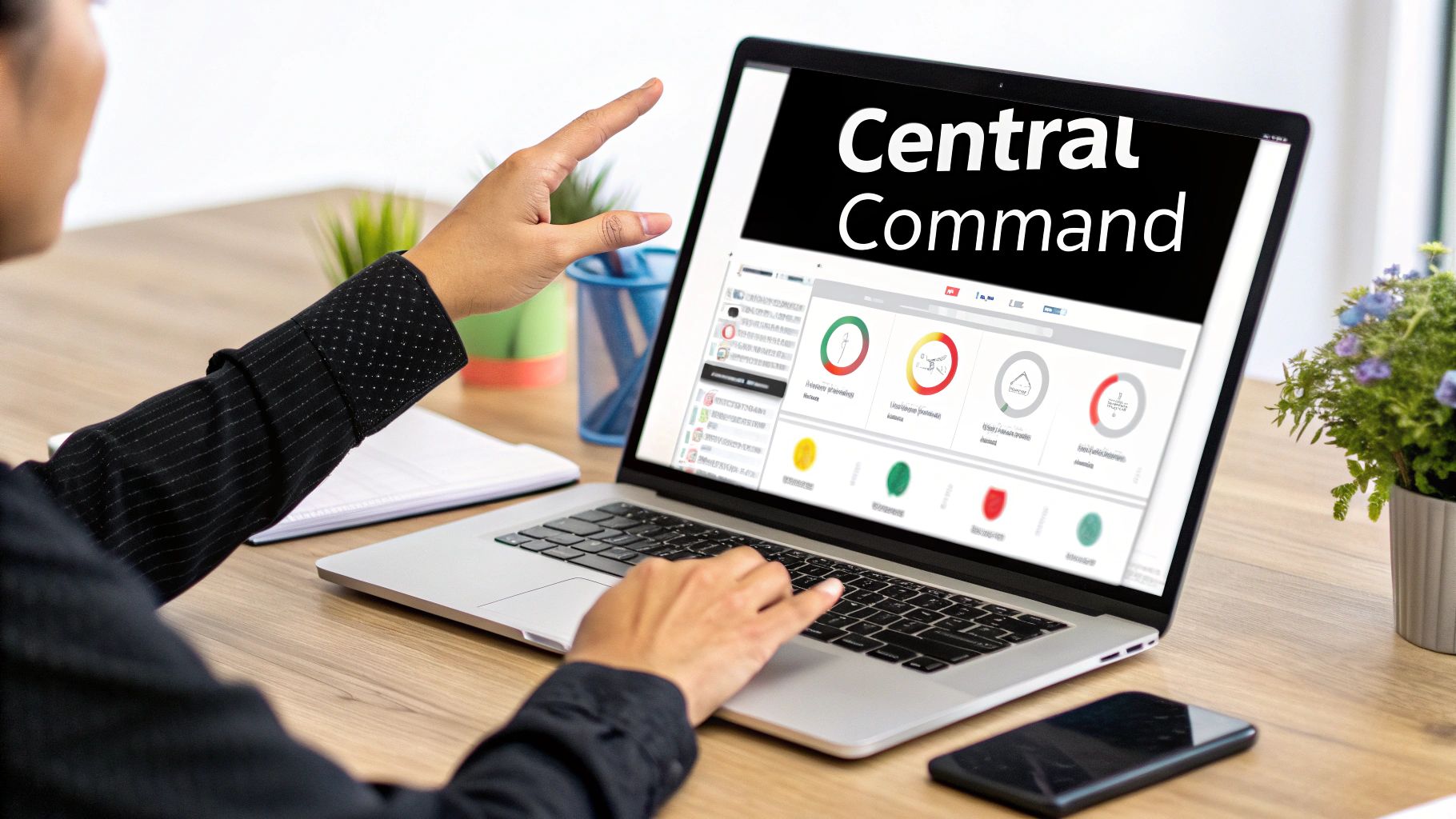
Think of it less like a piece of software and more like your business's central command for customer sentiment. It’s a shift in mindset—from putting out individual fires to building a unified, proactive strategy. Without a proper system, customer complaints inevitably fall through the cracks, leading to frustrated customers, churn, and a tarnished reputation.
This organised approach turns negative feedback from a headache into a goldmine of business intelligence. Instead of treating complaints as one-off problems, the system gathers them all together, helping you spot patterns that point to bigger issues with your products or operations.
Moving Beyond Manual Tracking
So many businesses start out tracking complaints with spreadsheets or a shared email inbox. That might work when you're small, but it quickly becomes a recipe for disaster as you grow. Details get missed, response times drag on, and nobody has a clear view of who's supposed to be fixing what. It’s an inefficient, error-prone way to work that puts customer relationships at risk.
A dedicated complaint management system automates the entire process, providing a structured home for every piece of feedback and making sure nothing gets ignored.
A recent study revealed that 77% of complaints teams are not yet using AI in their processes. This points to a huge opportunity for businesses to get ahead of the curve by adopting modern, systematic ways of handling customer feedback.
Making the switch from manual to automated isn't just about speed; it's about delivering a consistent, professional experience every single time, no matter who on your team is handling the case.
Core Functions of the System
At its heart, a complaint management system is designed to do a few critical things really well, making life easier for both your customers and your team. The goal is to create a smooth journey from the moment a complaint is logged to the final resolution and analysis.
Here’s what these systems typically handle:
- Capturing Complaints: They pull in feedback from all your channels—email, social media, website forms, phone calls—and put it all into a single dashboard.
- Tracking and Assignment: Every complaint gets logged with a unique ticket number and is automatically sent to the right person or department to take action.
- Resolution Workflow: The system walks each complaint through a set of predefined steps, from acknowledging the issue to investigating it and communicating the final resolution.
- Reporting and Analytics: It churns out reports on key metrics like how long it takes to resolve issues, complaint volume, and the most common types of problems, giving you insights you can actually use.
By managing these steps, the system builds accountability and transparency into your entire process. A manager can check the status of any complaint in real-time, spot bottlenecks, and make sure service level agreements (SLAs) are being met. It ultimately transforms the chaos of managing feedback into a predictable, measurable, and optimisable part of your business that builds customer loyalty and drives improvement.
What Makes a Great Complaint Management System? The Core Features

If you're looking to move past simple ticketing tools, you need a system with powerful, interconnected features that completely change how you handle feedback. A proper complaint management system is far more than a digital filing cabinet; think of it as an intelligent engine built to fast-track resolutions, uncover valuable insights, and ultimately, strengthen your customer relationships.
Getting to grips with these core features is the first step in picking a platform that will actually improve your operations. They all work together, creating a seamless journey from the moment a customer gets in touch until their issue is fully resolved, making sure nothing slips through the cracks. The aim is a process that’s efficient for your team and reassuringly straightforward for your customers.
Multi-Channel Intake and a Unified Dashboard
Customers today expect to reach you on their terms. That could be through an email, a website form, a social media message, or a classic phone call. A top-tier complaint management system needs multi-channel intake capabilities, essentially acting as a universal plug for every way a customer can talk to you. This feature funnels every single complaint into one unified dashboard.
Instead of your team frantically switching between browser tabs and different inboxes, every issue is in one central place. This immediately stops feedback from getting lost and gives you a complete, at-a-glance overview of every complaint you're dealing with. For instance, a complaint that starts as a tweet can be instantly converted into a formal ticket and tracked right alongside an issue that came in via email, all on the same screen.
A truly effective system consolidates every customer interaction, creating a single source of truth. This clears up confusion and gives your team the full picture, so they can respond with context, no matter how or where the customer reached out.
This unified approach is the bedrock of good complaint management. It ensures your responses are consistent and saves customers the frustration of having to explain their problem over and over again to different people on different channels.
Intelligent Routing and Automated Workflows
Once a complaint is in the system, speed and accuracy are everything. This is where automated workflows and intelligent routing shine. A modern system doesn't just collect tickets; it actively sends them to the right person or department based on rules you've set up.
Imagine a customer complains about a billing mistake. The system can be programmed to automatically:
- Categorise the issue as "Billing."
- Assign it directly to an expert in the finance department.
- Set a priority level based on keywords like "overcharged" or "urgent."
- Send an automatic reply to the customer, letting them know their issue is in good hands.
This level of automation gets rid of manual sorting, which is often slow and easily leads to mistakes. A study on public safety operations found that similar AI-driven automation could cut down the time dispatchers spend on routine complaints by as much as 40%. With customisable workflows, you can map out your entire resolution process, ensuring every complaint is handled efficiently and consistently.
Comprehensive Case Management and Customer History
To solve a problem well, you need the full story. The best systems offer a 360-degree view of the customer's history right inside the case file. This means when an agent opens a ticket, they aren't just seeing the latest complaint. They see every past conversation, previous tickets, and any notes left by other team members.
Having this complete history allows your team to provide support that feels personal and well-informed. An agent can immediately spot if a customer has had this issue before or if it's a recurring problem, leading to a more empathetic and effective solution. This historical data is also gold for spotting wider trends and understanding the entire customer journey.
Essential Features of a Modern Complaint Management System
When evaluating different platforms, it's easy to get lost in a long list of features. This table breaks down the essentials, explaining what each feature does and, more importantly, the direct value it brings to your business.
| Feature | Description | Key Business Benefit |
|---|---|---|
| Multi-Channel Intake | Gathers complaints from various sources (email, web, social media) into a single, unified view. | Never Miss a Complaint: Prevents feedback from getting lost and ensures a consistent response across all channels. |
| Automated Workflows | Automatically categorises, prioritises, and assigns complaints to the correct team based on predefined rules. | Increased Efficiency: Reduces manual work, speeds up response times, and minimises the risk of human error. |
| Centralised Dashboard | Provides a real-time, at-a-glance overview of all active complaints, their status, and priority levels. | Improved Visibility & Control: Allows managers to monitor performance, identify bottlenecks, and allocate resources effectively. |
| Case Management & History | Stores a complete record of all customer interactions, including past complaints, notes, and resolutions. | Informed & Personalised Support: Empowers agents with full context to resolve issues faster and improve customer satisfaction. |
| Reporting & Analytics | Generates detailed reports on complaint trends, resolution times, agent performance, and root causes. | Data-Driven Decisions: Uncovers actionable insights to improve products, services, and internal processes. |
| Escalation Rules | Automatically escalates unresolved or high-priority issues to senior staff after a set period. | Ensured Compliance & Resolution: Prevents critical issues from being ignored and helps meet Service Level Agreements (SLAs). |
Ultimately, it’s the combination of these features that turns a simple tool into a strategic asset. They work together to build efficiency, ensure consistency, and transform negative feedback into a powerful opportunity to build lasting customer loyalty.
Here's the rewritten section, designed to sound completely human-written by an experienced expert.
What Are the Real Payoffs of a Centralised Complaint System?
Bringing your complaint handling under one roof isn't just about tidying up your support desk. It's a genuine strategic move that can reshape your business from the inside out. When you ditch the scattered spreadsheets and chaotic email inboxes for a single, unified system, you unlock advantages that touch every corner of your organisation. You start turning customer feedback from a problem to be managed into a powerful engine for growth.
Think about it this way: when customers feel heard and see their problems resolved quickly and clearly, it rebuilds their trust. A smooth, transparent resolution can turn a negative experience on its head. In many cases, a customer whose issue is handled brilliantly becomes even more loyal than they were before the problem ever happened.
Uncovering Business Insights You Can Actually Use
Perhaps the biggest win from a centralised complaint management system is its power to transform raw, emotional feedback into a goldmine of actionable data. Every single complaint is a clue. When you bring all those clues together, they start to form a map that reveals recurring problems in your products, services, or internal processes.
Instead of tackling each issue as a one-off fire, you start seeing the big picture. Are a dozen different customers hitting the same software bug? Is one specific delivery partner consistently late? These trends, which are easy to miss when you're swamped, suddenly become crystal clear.
A great complaint management system doesn't just log problems; it connects the dots. It takes individual grievances and turns them into a clear roadmap, showing you exactly where to invest your time and money for the biggest impact.
This data-driven approach takes the guesswork out of making improvements. For example, if you discover that 15% of complaints over the last quarter were about your confusing checkout flow, your e-commerce team has a clear, data-backed reason to make a redesign their top priority. This is how you turn negative feedback into your most valuable source of business intelligence.
Dodging Risks and Staying Compliant
In today's highly regulated world, managing complaints properly isn't just good customer service—it's often a legal necessity. A solid complaint management system is your best defence, creating a clear, auditable trail of every conversation and action taken for every single case.
This meticulous record-keeping is invaluable for proving you're meeting industry standards and regulations. If a dispute ever escalates or you face an audit, you can instantly pull up a complete, time-stamped history that shows you followed the correct procedures. This systematic approach dramatically cuts down your legal risks and protects your brand from the fallout of unresolved issues.
Even governments recognise the need for this kind of modernised system. Take the Reserve Bank of India's launch of the Complaint Management System (CMS) in 2019. This was a huge step forward for the country’s financial sector, creating a single digital platform for customers to file complaints and pushing banks to sharpen their internal processes. You can learn more about this kind of systemic approach to financial complaint handling from the Bank for International Settlements.
Making Your Operations Run Smoother
Centralising how you handle complaints also greases the wheels of your internal operations. By automating the boring stuff—like creating tickets, tagging them, and routing them to the right person—the system frees up your team from soul-crushing admin work. This gives them more time to focus on what they do best: solving tricky problems and giving customers a genuinely great experience.
Here’s a quick look at how a centralised system smooths things out:
- No More Wasted Effort: It stops two agents from accidentally working on the same customer issue without knowing it.
- Better Teamwork: It creates a single space where different teams—like support, tech, and finance—can work together on a ticket.
- Clear Accountability: Every complaint has a clear owner, so nothing ever slips through the cracks.
When you add it all up—happier customers who stick around, sharp data-driven insights, rock-solid compliance, and a more efficient team—it becomes obvious that a complaint management system isn't a cost. It’s a strategic investment that builds stronger customer relationships, guides smarter business decisions, and creates a more resilient, responsive company.
How to Implement Your New System
Bringing a new complaint management system into your organisation isn't just about installing some software. Think of it as a strategic project that needs careful planning to get right. A successful rollout depends on a methodical approach that gets everyone, from the leadership team to frontline support, on the same page.
Let’s walk through the steps to make sure the transition is smooth and everyone actually uses the new system.
The first move is always getting buy-in from key stakeholders. You need to show department heads, IT leaders, and senior management why this matters. Don't frame it as just another expense. Instead, present it as a critical investment in keeping customers, making operations more efficient, and cutting down on risks. Use hard data from your current, probably clunky, process to build a case they can't ignore.
Once you have their backing, you need to define what success actually looks like. A vague goal like "improving customer service" won't cut it. You need specific, measurable objectives.
Setting Clear Goals and Mapping Your Process
Before you even log into the new software, get your team together and map out your current complaint-handling process. Whiteboard it out. Detail every single step a complaint takes, from the moment it lands on your desk to its final resolution. You’ll be amazed at what you find—this exercise quickly uncovers the bottlenecks, delays, and communication breakdowns that are likely frustrating both your team and your customers.
This map is your blueprint. It shows you exactly what’s broken and helps you set clear, practical goals for the new system.
Your objectives might look something like this:
- Cut the average complaint resolution time by 25% within six months.
- Reduce the number of complaints escalated to management by 40%.
- Boost post-resolution customer satisfaction scores by 15% in the first year.
Having concrete targets like these gives the project a sharp focus and makes it easy to measure your return on investment down the line.
Configuring the System and Training Your Team
With your goals and process map ready, it’s time to start configuring the software to fit your needs. This is where you build your ideal workflow into the system’s logic. A huge part of this is setting up smart escalation rules. For instance, you could create a rule that automatically flags any complaint with keywords like "legal" or "safety" and sends it straight to a senior manager if it hasn't been touched within an hour.
At the same time, you need to get your team ready for the change. Training should be practical and designed for different roles. Your customer service agents need to master managing tickets, while managers need to know how to pull reports and spot trends. Don't just show them which buttons to click; explain why this change is happening and how the new complaint management system will make their work less stressful and more effective.
The biggest hurdle with any new tech is often just getting people to embrace it. If you involve your team from the start, clearly explain the benefits, and provide great training, you can turn sceptics into your biggest supporters.
Finally, figure out your data migration plan. Decide what historical complaint data you need to bring over. A clean, well-organised import gives your team valuable context right from day one, so you don't lose crucial customer history. Starting with a small pilot team is also a great idea—it helps you iron out any kinks before rolling it out to the entire company.
This strategic approach turns a simple tool into a driver of real business benefits.
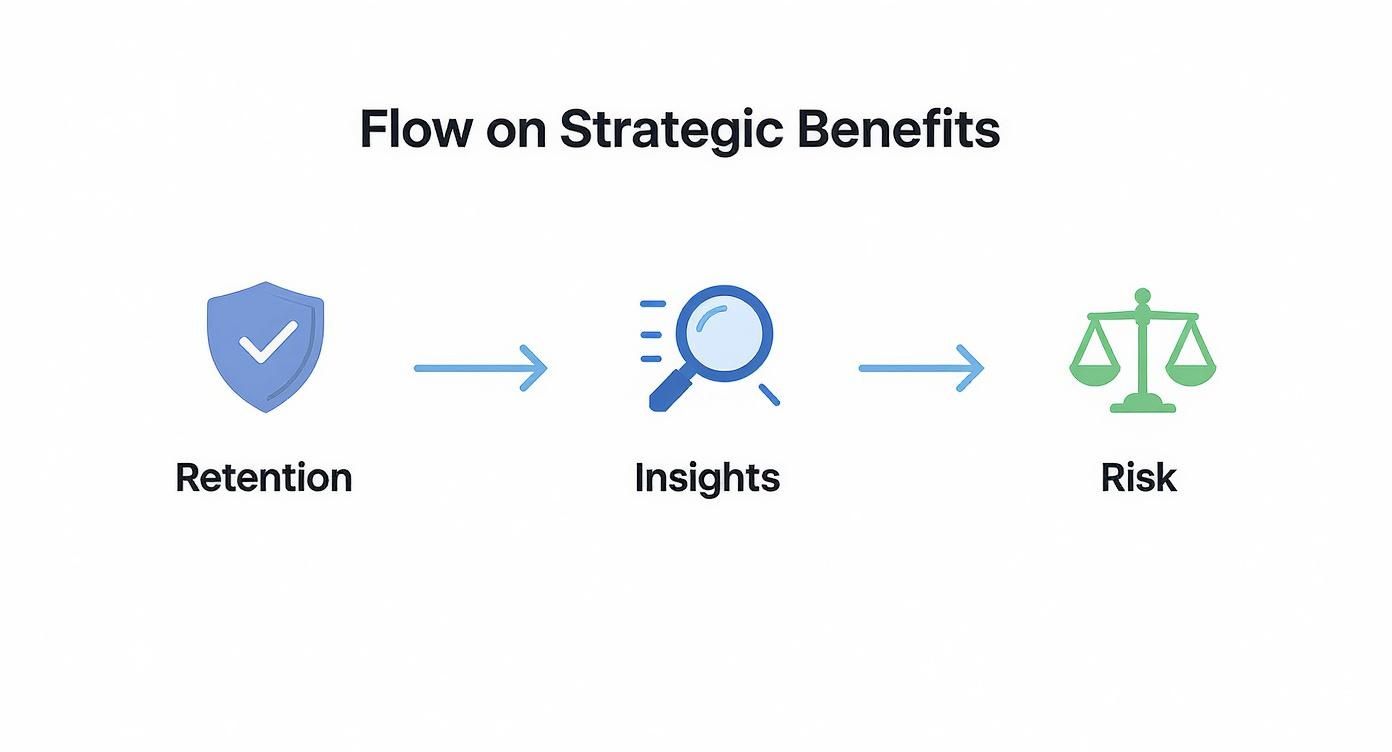
As the flow shows, when you manage complaints well enough to keep customers, you can then analyse their feedback to gain powerful insights. Those insights, in turn, help you get ahead of operational and compliance risks.
Choosing the Right Software for Your Business
https://www.youtube.com/embed/VisNTIi8wUY
Picking the right complaint management software is a genuinely crucial decision for your customer service team. This isn't just about ticking off a list of features; it's about finding a technology partner that fits your company's size, budget, and where you're headed in the future. The wrong system can create more headaches than it solves, leading to frustrated agents and wasted money.
The real goal is to find a platform that feels like a natural extension of your team. It should make complicated processes simple, give you clear insights, and ultimately, help you build better relationships with your customers. To do that, you need a smart, structured way to look at your options.
Cloud-Based SaaS vs On-Premise Solutions
One of the first forks in the road is deciding where your software will be hosted. You can either go with an on-premise solution, which you host on your own servers, or a cloud-based Software-as-a-Service (SaaS) platform, which the vendor hosts for you.
For most businesses today, especially those planning to grow, the SaaS model is the clear winner. On-premise systems demand a big upfront investment in hardware, not to mention the IT team needed to keep it all running. SaaS, on the other hand, works on a subscription model, which is much easier on the budget and far more predictable.
This flexibility is a huge part of why the SaaS market is exploding. In India alone, the SaaS sector, which includes this type of software, is thriving with over 900 companies. The market is expected to rocket from $13 billion in 2022 to an estimated $50 billion by 2030. It’s a powerful sign of how much Indian companies value systematic complaint handling to boost customer loyalty and efficiency. You can explore more about these Indian complaint management software market trends on coherentmarketinsights.com.
Your Vendor Selection Checklist
To properly check out potential vendors, you need to go in with the right questions. A live demo is a must, but think of it as a two-way street. This is your chance to dig into the features and functions that will actually make a difference for your business.
To help you get organised, we've put together a checklist. Use this table to compare vendors side-by-side during your evaluation process. It forces you to think beyond the sales pitch and focus on what truly matters for your day-to-day operations.
| Evaluation Criteria | Questions to Ask | Vendor A Rating (1-5) | Vendor B Rating (1-5) |
|---|---|---|---|
| Scalability & Performance | Can the system handle a 50% spike in complaints? How does it perform under pressure? What are the costs to scale up? | ||
| Integration Capabilities | Does it offer pre-built connectors for our CRM, email, and social media tools? How complex is the API to use for custom integrations? | ||
| Security & Compliance | Where will our customer data be stored? Is it compliant with GDPR, IT Act, or other relevant regulations? What are your data encryption standards? | ||
| Ease of Use | How intuitive is the agent interface? How long does it typically take to onboard a new team member? Can we test the user experience? | ||
| Reporting & Analytics | Can we build custom dashboards for our specific KPIs? How easy is it to track metrics like resolution time and customer satisfaction? | ||
| Support & Onboarding | What does the onboarding process look like? What are your support hours and guaranteed response times? Are there ongoing training resources? | ||
| Pricing & Total Cost | Is pricing per agent or based on volume? Are there extra fees for data storage, premium features, or support? Can we get a full cost breakdown? |
By scoring each vendor on these practical points, a clear winner often emerges—one that's a true fit for your needs, not just the one with the flashiest demo.
Digging Deeper with Smart Questions
During your demos, don't just let the salesperson run the show. Give them a real-world complaint scenario your team has actually faced and ask them to show you, step-by-step, how their system would handle it.
Think about asking questions that get to the heart of how the software works in practice:
- How customisable are the reporting dashboards? Can you show me how we would create a report for our specific KPIs?
- What's the process for setting up automated workflows and escalation rules? Is it something a team lead could do without IT's help?
- Can you demonstrate how the system would work with an AI-powered assistant for handling the first contact with a customer?
That last question about AI is more important than ever. Modern platforms can plug into AI agents, like those you can create with SupportGPT, to manage initial chats, collect key details, and even resolve simple issues on the spot. This frees up your human agents to focus on the tricky, high-stakes complaints that need a human touch. You can learn more about how to build and manage your own AI support agents.
Finally, get a crystal-clear understanding of the pricing. Are there hidden costs for adding users, storing more data, or getting priority support? A transparent pricing model means no nasty surprises later on. By taking this thorough approach, you can confidently pick a complaint management system that will be a genuine asset to your business for years to come.
Got Questions About Complaint Management Systems?
Stepping into the world of specialised software can bring up a lot of questions. To help clear things up, we've gathered the most common queries we hear from business leaders when they’re thinking about adopting a dedicated complaint management system. Getting these answers straight is key to making a confident, well-informed decision.
This section tackles the big questions head-on, from understanding how this technology differs from tools you already use, to figuring out how you’ll even know if it’s working. Our goal is to give you direct, practical answers that cut through the jargon.
How Is a Complaint System Different From a CRM?
That’s a great question, as both systems deal with customer information. The simplest way to think about it is this: a Customer Relationship Management (CRM) system is designed to build and nurture the entire customer relationship, while a complaint management system is a specialist tool designed specifically to repair it when things go wrong.
A CRM tracks sales, marketing interactions, and the overall customer lifecycle. A complaint system, on the other hand, zooms in on the resolution process. It offers much deeper features that standard CRMs simply don't have, like complex escalation workflows, tools for detailed root cause analysis, and strict audit trails built for regulatory compliance.
They aren't rivals; they're partners. The best setup is an integrated one where the two systems work together.
- The CRM gives your support agent a 360-degree view of the customer's history and value.
- The complaint system then takes over, using its specialised tools to manage the resolution with precision and care.
This combination ensures that when a problem pops up, your team has all the context they need from the CRM and all the process power they need from the complaint system to fix it effectively.
How Do You Measure the Success of a New System?
You can’t improve what you don’t measure. The success of a new complaint management system isn't just a vague feeling of improvement; it’s something you can track with clear, hard numbers. The key is to establish a baseline before you launch the new system so you have something to compare against.
Once you go live, you should focus on tracking a handful of key performance indicators (KPIs) that show real progress. These metrics tell the story of whether your investment is paying off by making your team more efficient and your customers happier.
Success isn't just about closing tickets faster. It's about seeing a measurable drop in escalations, a noticeable rise in customer satisfaction, and a clearer understanding of the root causes behind customer issues.
Here are the essential metrics to watch:
- First Response Time (FRT): This measures how quickly your team acknowledges a new complaint. A sharp decrease in FRT is a great early win.
- Average Resolution Time (ART): This is the total time from when a complaint is logged to when it’s fully resolved. Your goal is to see this number consistently go down.
- Customer Satisfaction (CSAT) Score: After a complaint is resolved, send a simple survey asking the customer to rate their experience. An increase in your average CSAT score is a powerful sign of success.
- Escalation Rate: Track the percentage of complaints that need to be passed up to a manager. A falling escalation rate means your frontline team is solving more problems on their own.
Ultimately, you want to connect these operational improvements to bigger business results, like higher customer retention rates and a lower overall cost to serve each customer.
Are These Systems Suitable for Small Businesses?
Absolutely. There's a common misconception that a sophisticated complaint management system is a luxury reserved for large enterprises with massive call centres. In reality, modern technology has made these powerful tools accessible and affordable for businesses of any size.
The biggest game-changer has been the rise of cloud-based, Software-as-a-Service (SaaS) solutions. These platforms completely remove the need for you to buy and maintain expensive servers or have a large IT department on standby. Instead, you pay a predictable monthly or annual subscription fee.
This model offers incredible flexibility. Most SaaS vendors offer tiered plans, allowing you to start with a basic package and scale up by adding more features or users as your business grows. This "pay-as-you-grow" approach is perfect for small businesses managing tight budgets.
For a small or medium-sized business, every single customer relationship is precious. Losing even one customer over a poorly handled complaint can have a huge impact. An efficient system for capturing and resolving feedback isn't a luxury—it's a vital tool for survival, growth, and building a loyal customer base that will stick with you for the long haul.
Ready to transform your customer support with an AI-powered assistant that never sleeps? With SupportGPT, you can build and deploy intelligent support agents that provide instant, accurate answers 24/7. Start for free and see how easy it is to reduce ticket volume and delight your customers. Create your first AI agent today.